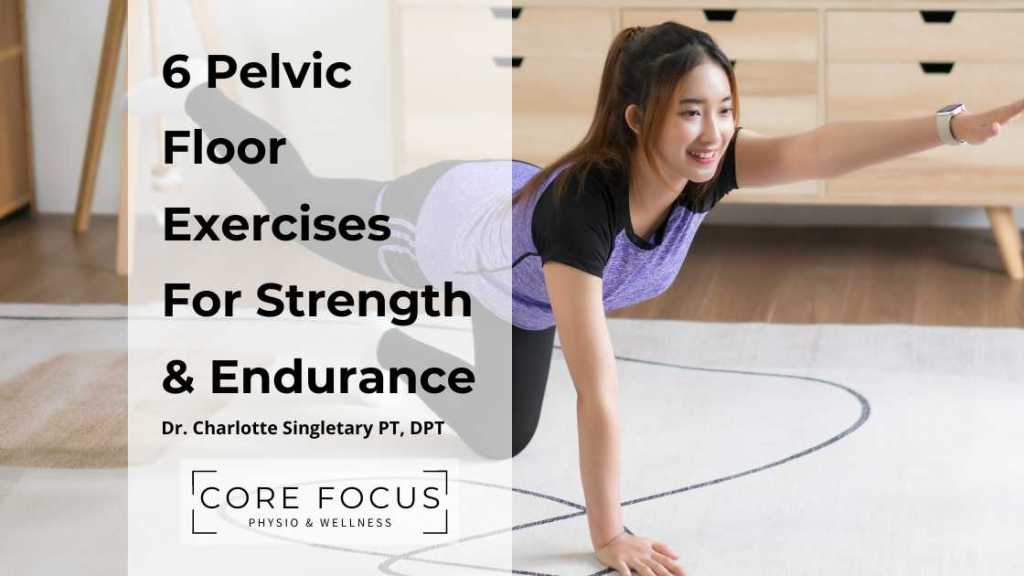
You can put a stop to those unexpected leaks with these six simple pelvic floor-safe exercises designed to enhance your strength and endurance. Many women experience bladder leakage, a common concern that can significantly disrupt their daily lives. Age doesn’t matter; whether you’re in your 20s, 40s, or 60s, addressing this issue is crucial.
Include pelvic floor exercises designed to build strength, improve coordination, and boost your endurance to your routine. Avoid breath holding or bearing down during exercise, especially if you suspect a pelvic organ prolapse, which will add more stress and strain to your pelvic floor. If you are experiencing pelvic floor dysfunction you can get diagnosed and receive a tailored exercise plan from your pelvic healthcare professional.
Pelvic Floor Safe Exercise
It’s important to tailor exercise intensity to your comfort level and to always listen to your body. Start with exercises and breathing patterns that reduce additional strain on your pelvic floor. As you get stronger, you can challenge yourself more. No need to rush; let’s get started with the following exercises.
Bridge
Begin by lying on your back with your knees bent and feet firmly planted on the floor. This exercise targets your glutes and core. Lift your hips off the ground while maintaining a level position, creating a flat tabletop from your chest to your knees. Feel the muscles engage as you hold the position.
To start, breathe out when lifting your hips. During advanced bridges, hold your hips at the top of the set and breathe in and out before returning to rest on the ground.
- Beginners: 2 sets of 10-12 reps
- Intermediates: 3 sets of 12-15 reps
- Advanced: 4 sets of 15-20 reps
Dead Bug
Lie on your back with your arms extended toward the ceiling and legs lifted, knees bent at a 90-degree angle. Lower your right arm and left leg simultaneously while maintaining a stable core. Alternate sides in a controlled manner.
Practice matching your breath to each simultaneous extension and lowering of your limbs. To advance this exercise with your breaths, use your limbs as a metronome as you simultaneously breathe in for four seconds and out for four seconds.
- Beginners: 2 sets of 8-10 reps (per side)
- Intermediates: 3 sets of 10-12 reps (per side)
- Advanced: 4 sets of 12-15 reps (per side)
Clamshell
This exercise focuses on your hip strength and mobility. Begin by lying on your side with your knees and hips comfortably bent. Keep your heels together and gently separate your knees while maintaining hip balance. Your hips will thank you for this exercise.
Take a breath in as you separate your knees and breathe out as you bring your knees together. During advanced clamshells, add resistance bands around our knees and hold your knees apart and breathe in and out before returning to rest.
- Beginners: 2 sets of 10-12 reps (per side)
- Intermediates: 3 sets of 12-15 reps (per side)
- Advanced: 4 sets of 15-20 reps (per side)
Plank
Assume a push-up position on your hands or elbows. Hold this position for as long as possible while ensuring a strong and stable core. Keep your butt from rising too high, and continue to breathe steadily.
Practice various breathing patterns while holding such as box breathing, 4-7-8 breathing, belly breathing, pursed-lip breathing, and 360 breathing while holding your plank.
- Beginners: 2 sets of 15-20 seconds
- Intermediates: 3 sets of 20-30 seconds
- Advanced: 4 sets of 30-60 seconds
Bird-Dog
Position yourself on the ground on all fours, hands, and knees. Extend one hand out in front of you while simultaneously stretching the opposite leg behind you. Feel the balance and coordination as you alternate sides.
Similar to Dead-Bug exercise, practice matching your breath to each simultaneous extension and lowering of your limbs. To advance this exercise with your breaths, extend your limbs as you simultaneously breathe in for four seconds and return your limbs as you breathe out for four seconds.
- Beginners: 2 sets of 8-10 reps (per side)
- Intermediates: 3 sets of 10-12 reps (per side)
- Advanced: 4 sets of 12-15 reps (per side)
Squat
Stand tall with your feet hip-width apart or slightly wider, toes slightly turned outward. This exercise works on your lower body strength. Keep your back flat as you initiate the squat by lowering yourself as far as your knees allow. Maintain a bit of a “butt out” posture as you descend and rise up.
To start, breathe out as you lower into a deep squat as to put less pressure on your pelvic floor. Breathe in as you stand up. When you are ready to add more stress on your pelvic floor, breathe in as you lower into a deep squat and lift and squeeze your pelvic floor as you stand. At the bottom of you squat, hold squat, practice breathing in and out.
- Beginners: 2 sets of 8-10 reps
- Intermediates: 3 sets of 10-12 reps
- Advanced: 4 sets of 12-15 reps
These repetitions and sets are general guidelines, and it’s important to listen to your body and adjust the numbers based on your fitness level and comfort. As you progress, you can increase the reps, sets, or add weights to continue challenging yourself.
Engaging in these pelvic floor exercises while focusing on controlled and mindful breathing will teach you to understand your body’s potential. You’re on a journey to enhance your pelvic floor wellness!
Disclosures & Disclaimers
Hey there! Just a heads-up. When you click on my links and make a purchase, I might get a tiny commission. It doesn’t affect my honest reviews and comparisons one bit! I’m all about recommending stuff I’ve personally tried, genuinely love, thoroughly researched, and wholeheartedly endorse.
** The views and opinions expressed on this site belong to Vigeo Ergo Consulting LLC. Any advice or suggestions offered herein are not a replacement for medical advice from a physician or other healthcare professional. My blogs are for informational and entertainment purposes only. It is not a substitute for professional medical advice, diagnosis, or treatment.
 Core Focus Fit
Leave a comment