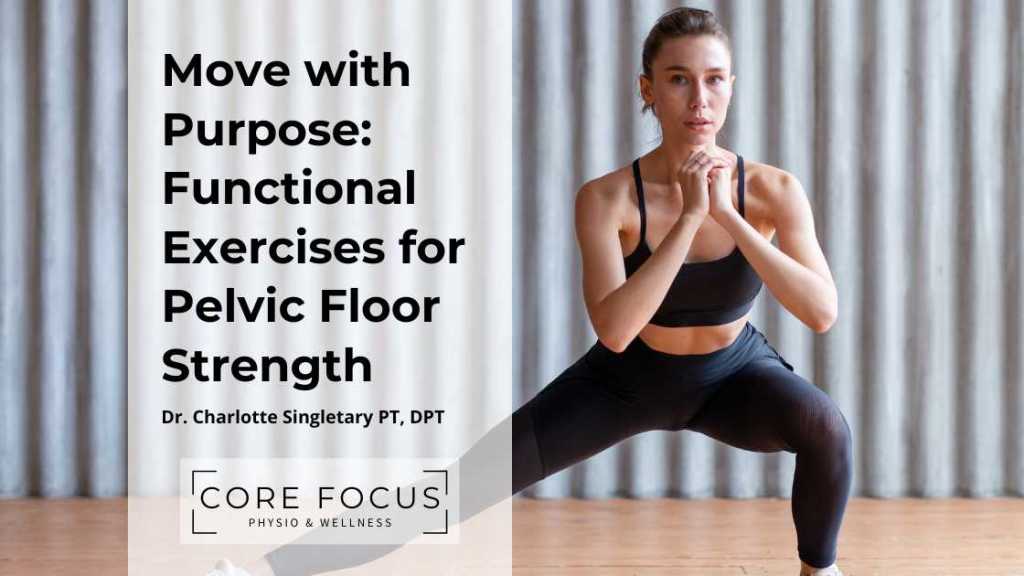

When people think of pelvic floor exercises, Kegels and floor-based exercises often come to mind. But in reality, your pelvic floor muscles don’t work in isolation—they function as part of your whole body. That means training them while standing and moving is far more effective for real-life strength and stability.
If you want to move with purpose, prevent injury, and build a strong foundation, here are five standing pelvic floor exercises that integrate stability, mobility, and strength into your everyday movements.
Why Strengthening Your Pelvic Floor in Standing Matters
Your pelvic floor supports your posture, balance, and core strength during everyday activities like:
- Walking and running
- Lifting groceries or kids
- Balancing on one leg
- Transitioning from sitting to standing
Since most of our daily movements happen upright, training your pelvic floor in a standing position helps improve function where you need it most.
5 Functional Standing Exercises for a Stronger Pelvic Floor
These exercises combine core activation, lower-body strength, and breath control to train your pelvic floor dynamically.
1. Standing 360° Breath with Arm Reach
Breathwork is the foundation to improve pelvic floor strength. This exercise teaches you to coordinate your breathing with movement, which is key for preventing leaks and improving stability.
How to do it:
- Stand tall with feet hip-width apart.
- Inhale deeply through your nose, expanding your ribs outward (360° breath).
- As you exhale, gently engage your lower abs and pelvic floor while reaching both arms overhead.
- Hold for a second, then inhale to return to start.
- Perform 8–10 reps.
Why it works: Encourages full-body stability while engaging the pelvic floor with breath control.
2. Sit-to-Stand with Core & Pelvic Floor Activation
Every time you get up from a chair, your pelvic floor is working. This simple but powerful movement builds functional strength for everyday life.
How to do it:
- Start seated in a chair with feet hip-width apart.
- Inhale to prepare.
- Exhale, press through your feet, engage your pelvic floor, and stand tall.
- Slowly lower back down with control.
- Perform 10–12 reps.
Why it works: Mimics daily movements while strengthening your glutes, core, and pelvic floor in a natural way.
3. Standing March with Core Engagement
This exercise improves pelvic stability and balance, making it great for runners and anyone who wants to prevent leaks during impact activities.
How to do it:
- Stand tall, hands on your hips.
- Inhale, then exhale as you lift one knee toward your chest, engaging your core and pelvic floor.
- Hold for a second, then lower with control.
- Alternate legs for 10–12 reps per side.
Why it works: Strengthens pelvic floor muscles in a weight-bearing position, improving balance and core control.
4. Lateral Step with Pelvic Floor Activation
Your pelvic floor works with your hips and glutes, so side-to-side movement is essential for full-body stability.
How to do it:
- Stand with feet hip-width apart.
- Inhale, then exhale as you take a step to the right, engaging your pelvic floor.
- Bring your left foot in to meet the right.
- Repeat in the other direction.
- Perform 10 steps per side.
Why it works: Strengthens the pelvic floor, glutes, and inner thighs, which work together to support your posture and stability.
5. Standing Lunge with Breath Control
Lunges train your pelvic floor to stabilize during movement, just like when walking or climbing stairs.
How to do it:
- Stand tall with feet hip-width apart.
- Step one foot forward into a lunge.
- Inhale as you lower, keeping your torso upright.
- Exhale as you push back to standing, engaging your pelvic floor.
- Perform 8–10 reps per side.
Why it works: Improves pelvic floor strength in a dynamic, weight-bearing position, helping prevent leaks and improve core coordination.
Moving with Purpose in Everyday Life
Pelvic floor strength isn’t about squeezing muscles in isolation—it’s about integrating strength into movement. These standing exercises train your pelvic floor to support you during real-life activities like walking, lifting, and balancing.
By moving with purpose and training your pelvic floor where it matters most, you’ll build a foundation of strength that keeps you active, confident, and pain-free.
Want to take it a step further? A pelvic floor physical therapist can personalize your routine and ensure you’re moving effectively.

Disclosures & Disclaimers
Hey there! Just a heads-up. When you click on my links and make a purchase, I might get a tiny commission. It doesn’t affect my honest reviews and comparisons one bit! I’m all about recommending stuff I’ve personally tried, genuinely love, thoroughly researched, and wholeheartedly endorse.
** The views and opinions expressed on this site belong to Vigeo Ergo Consulting LLC. Any advice or suggestions offered herein are not a replacement for medical advice from a physician or other healthcare professional. My blogs are for informational and entertainment purposes only. It is not a substitute for professional medical advice, diagnosis, or treatment.
 Core Focus Fit
Leave a comment