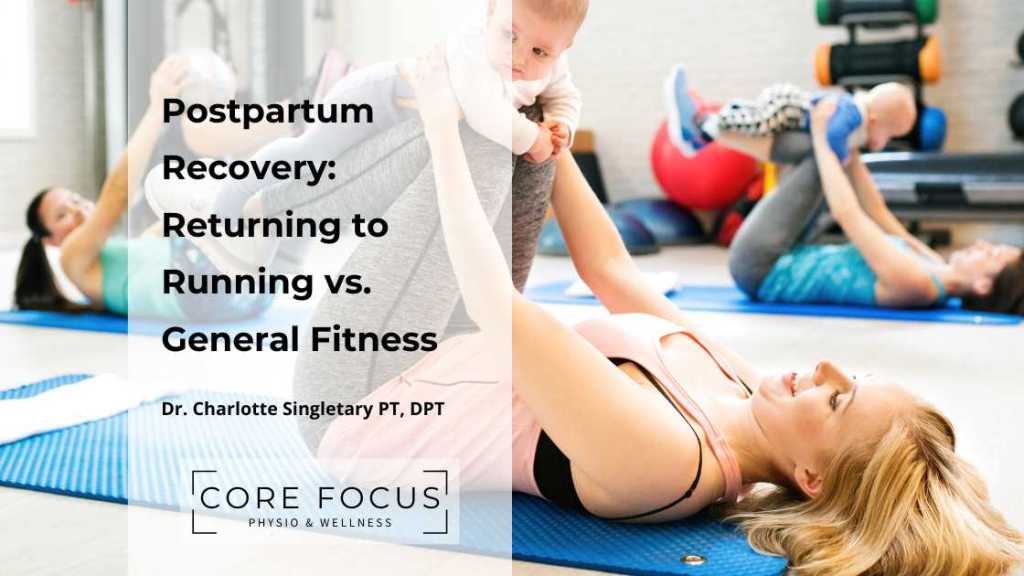

In the early days of postpartum life, fitness often takes a back seat to feedings, sleep deprivation, and emotional recovery. Whether you’re six weeks or six months postpartum, the desire to “get your body back” or just feel more like yourself again is valid—and very real.
But as a physical therapist and mom myself, I want to gently shift the narrative: Instead of focusing on “bouncing back,” what if we centered our recovery on rebuilding forward?
This May, as we honor Maternal Mental Health Month, let’s take a look at two different paths moms often consider in their postpartum fitness journeys—returning to running vs. easing into general fitness—and how each can support both your physical and mental well-being.
Running Postpartum: Know When (and How) to Lace Back Up
Running is often seen as the ultimate comeback, especially for women who ran pre-pregnancy. It feels empowering, freeing, and familiar. But postpartum, it’s not as simple as just picking up where you left off.
Here’s what I always remind postpartum runners:
- Your pelvic floor and core need time to heal—even if your doctor gave you a 6-week “all clear.”
- Joint stability and hormone shifts (thanks, relaxin!) can linger for months.
- High-impact activities like running can worsen issues like leaking, pelvic heaviness, or back pain if you haven’t rebuilt the foundation first.
That doesn’t mean running is off the table. It means having a guided, phased return—one that strengthens your core, glutes, and stabilizers before piling on the miles. Not only does this approach prevent injury, it also helps boost confidence—and that matters just as much.
General Fitness: A Gentler (but No Less Important) Path
For many moms, general fitness like walking, bodyweight strength, yoga, or mobility training may feel more approachable. And here’s the truth: It is fitness. You don’t need to be training for a 10K to be “getting back in shape.”
This path is ideal for women who:
- Are still navigating pelvic floor recovery or diastasis recti
- Need lower-impact movement to manage fatigue or stress
- Are in a season of caregiving where short, flexible workouts fit best
Movement—even in small doses—can reduce anxiety, stabilize mood, and improve sleep, all of which support better maternal mental health (especially in the tender first year postpartum).
Mental Health Matters: Move for the Mind Too
Exercise in any form boosts endorphins and reduces cortisol—two key players in emotional health. But postpartum isn’t just about hormones—it’s about identity. Many moms feel lost in their new role. Movement, when done with purpose and grace, can reconnect you to your body, your goals, and your sense of self.
So whether you’re power walking with a stroller or interval training in the driveway, remind yourself: You’re not just working out. You’re reclaiming space for your well-being.
Which Path Is Right for You? Maybe Both.
Some moms find strength in gentle yoga at three months postpartum and hit their first trail run by nine months. Others ease into resistance bands and never return to running—and feel stronger than ever.
The goal isn’t to choose one over the other. It’s to stay in tune with your body, your season, and your mental health. And if you’re not sure where to begin, that’s where I come in. I help active women rebuild core strength, protect their pelvic floor, and return to fitness with confidence—no matter what path they choose.
This Month, Give Yourself Permission to Start Where You Are
Maternal Mental Health Month is a reminder that your physical and emotional recovery matter. You deserve to move in a way that makes you feel supported, not pressured.
So pause. Breathe. Move when you’re ready. Your comeback is yours to define.
Disclosures & Disclaimers
Hey there! Just a heads-up. When you click on my links and make a purchase, I might get a tiny commission. It doesn’t affect my honest reviews and comparisons one bit! I’m all about recommending stuff I’ve personally tried, genuinely love, thoroughly researched, and wholeheartedly endorse.
** The views and opinions expressed on this site belong to Vigeo Ergo Consulting LLC. Any advice or suggestions offered herein are not a replacement for medical advice from a physician or other healthcare professional. My blogs are for informational and entertainment purposes only. It is not a substitute for professional medical advice, diagnosis, or treatment.
 Core Focus Fit
Leave a comment