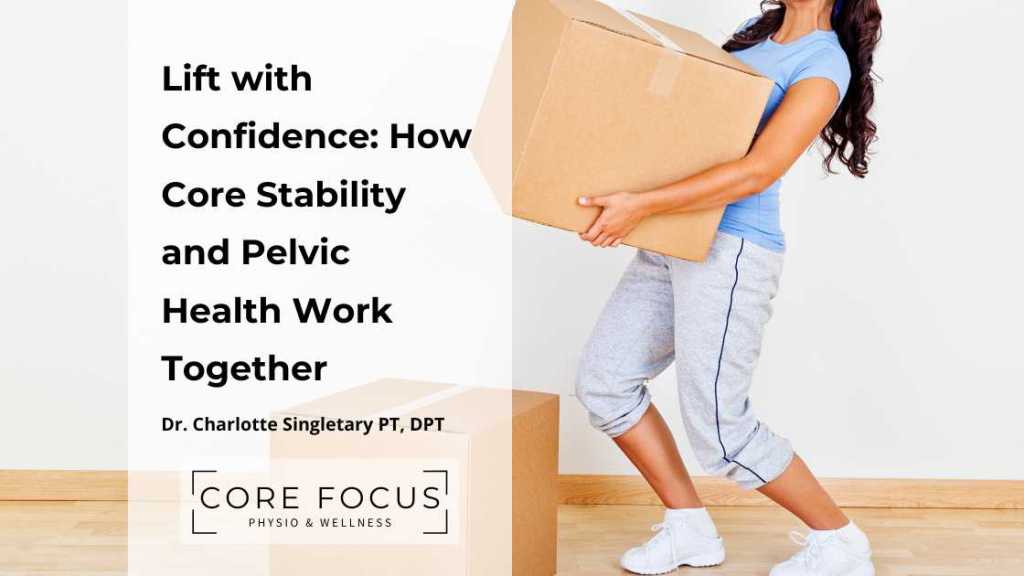

The core isn’t just abs—it’s your foundation.
When you think of lifting with confidence—whether it’s groceries, a barbell, or a toddler—your abs might be the first muscles that come to mind. But your true core is more than just a six-pack. It’s a deep, integrated system that includes your pelvic floor, diaphragm, deep abdominal muscles, and spinal stabilizers. These muscles work together like a supportive team to control pressure, stabilize your spine, and keep you from leaking or straining when you lift.

If you’ve ever felt a tug in your lower back, noticed pressure “down there,” or experienced a little bladder leakage during a workout, it might be time to check in on your core-pelvic connection.
What Is Core Stability and Why Does It Matter?
Core stability means having enough strength, control, and coordination in the deep trunk muscles to support movement without compensation or pain. It’s what keeps your spine safe and your body balanced. Good core stability:
- Protects your low back during lifting and bending
- Helps distribute loads evenly throughout your body
- Keeps you stable during dynamic movement
- Prevents injuries that come from overuse or poor mechanics
It’s not about bracing every muscle as hard as you can. In fact, gripping or clenching your core (especially your abs or glutes) can sometimes make pelvic symptoms worse. Think coordination over contraction.
The Pelvic Floor: The Often-Forgotten Core Muscle
The pelvic floor is the base of your core canister, supporting your organs and controlling continence. It works reflexively with your diaphragm and deep abdominal muscles to maintain pressure and support.
Here’s the thing: if your pelvic floor isn’t functioning well—maybe it’s too tight, weak, or not responding in time—you might:
- Leak with lifting or jumping
- Feel heaviness or bulging in the pelvic region (a sign of prolapse)
- Struggle to activate your core effectively
- Experience hip or back pain during workouts
Strength training without pelvic awareness can actually worsen these issues if you’re not tuned in to your body’s cues.
How to Train Core and Pelvic Floor Together
To build a strong, functional core that supports pelvic health, try these tips:
- Start with Your Breath. Diaphragmatic breathing trains your core and pelvic floor to move in sync. Inhale to expand your ribs and belly; exhale to gently lift and engage your pelvic floor and lower abs.
- Use the “Blow Before You Go” Technique. Exhale and gently engage your core and pelvic floor just before lifting or exerting effort. This helps manage intra-abdominal pressure and supports your spine and pelvis.
- Lift with Alignment. Keep ribs stacked over hips, spine neutral, and feet grounded. Avoid breath-holding or “bearing down” (which adds pressure to your pelvic floor).
- Train from the Inside Out. Incorporate exercises that layer pelvic floor activation with functional movement:
- Dead bugs
- Wall sits with breathwork
- Bridges with core exhale
- Farmer’s carries with posture focus
- Squats with breath and pelvic floor timing
- Know When to Rest or Regress. If you’re leaking, bulging, or feeling off balance during lifts, it’s not a sign to quit—it’s a sign to modify. A pelvic floor physical therapist can help you build a plan that supports your goals without setbacks.
Lifting Isn’t Just Physical—It’s Empowering
Learning to lift well isn’t just about strength. It’s about trust—trusting your body to support you without pain or fear of leakage. When your core and pelvic floor are working together, you move better, feel stronger, and can show up for all the lifting life requires—from workouts to weekend projects.
Let’s Recap:
- Core stability and pelvic floor health are deeply connected
- Your breath is your secret weapon for coordinated lifting
- Smart training beats hard training—especially if you want long-term strength and pelvic confidence
Whether you’re getting back to fitness postpartum, navigating perimenopause, or just tired of worrying about leaks, know this: you can rebuild. You can be strong. And yes—you can lift with confidence.
Disclosures & Disclaimers
Hey there! Just a heads-up. When you click on my links and make a purchase, I might get a tiny commission. It doesn’t affect my honest reviews and comparisons one bit! I’m all about recommending stuff I’ve personally tried, genuinely love, thoroughly researched, and wholeheartedly endorse.
** The views and opinions expressed on this site belong to Vigeo Ergo Consulting LLC. Any advice or suggestions offered herein are not a replacement for medical advice from a physician or other healthcare professional. My blogs are for informational and entertainment purposes only. It is not a substitute for professional medical advice, diagnosis, or treatment.
 Core Focus Fit
Leave a comment