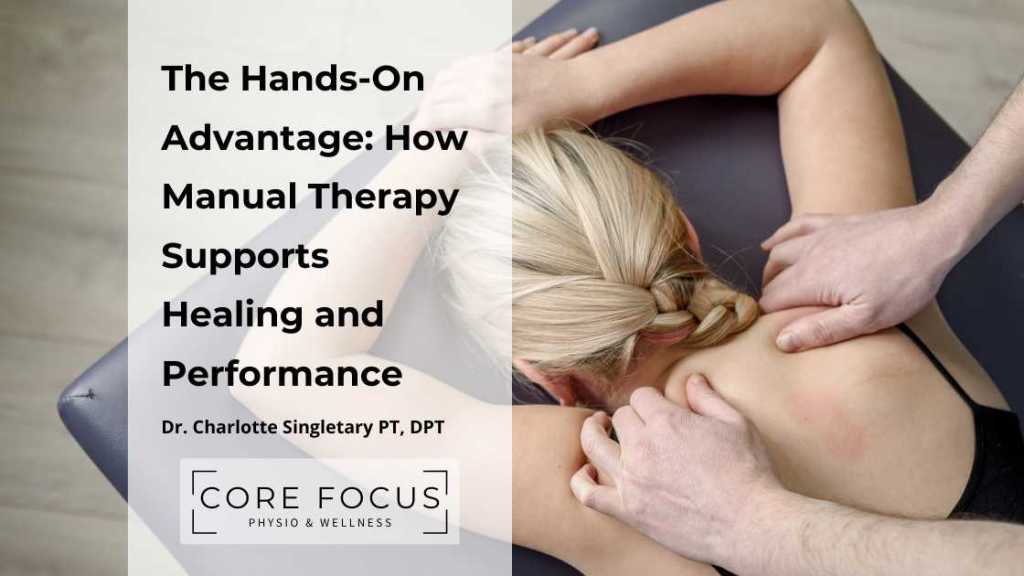

When your body feels stiff, sore, or just not moving quite right, manual therapy can be a game-changer. Whether you’re recovering from an injury, dealing with nagging tension, or simply looking to move better, this hands-on approach has real benefits for active adults juggling fitness, work, and daily demands.
Let’s break down what manual therapy actually involves, how it helps, and the different techniques your physical therapist may use—many of which you can even practice at home with a bit of guidance.
What Is Manual Therapy and Why Does It Matter?
Manual therapy refers to hands-on techniques used by physical therapists to improve tissue mobility, ease pain, and support the body’s natural healing process. It’s not just about feeling better in the moment—it’s about restoring how your body moves and responds to everyday demands.
Think of it like resetting your system: freeing up stuck tissues, calming overactive muscles, and creating the space your body needs to move well and heal better.
The Benefits: From Pain Relief to Performance Gains
Manual therapy can help you:
- Reduce pain and inflammation
- Improve flexibility and joint range of motion
- Break up scar tissue and adhesions
- Down-train overactive or guarded muscles
- Improve circulation and tissue healing
- Enhance coordination and movement awareness
- Support overall performance and injury prevention
Whether you’re getting back into the gym or just want to get through the workday without aching, these techniques offer real relief and progress.
9 Common Manual Therapy Techniques Explained
1. Static Stretching
This involves holding a muscle in a lengthened position to promote relaxation and elongation. It’s passive and often used early in rehab or after activity to calm the nervous system and maintain flexibility.
2. Dynamic Stretching
Gentle movement through a range of motion helps promote mobility while engaging muscles lightly. It’s ideal for warm-ups or reintroducing movement to stiff areas.
3. Myofascial Release
With slow, sustained pressure on the fascial layer (the connective tissue surrounding muscles), this technique releases tension and restrictions without aggressive force. Great for those with chronic tightness or sensitive systems.
4. Cupping Therapy
Using suction to gently lift the fascia and improve circulation, cupping decompresses soft tissue and helps reduce soreness and stiffness. It’s non-invasive but highly effective.
5. Contract-Relax (PNF Stretching)
This technique involves contracting a muscle against resistance followed by a stretch. It retrains neuromuscular coordination and improves flexibility with active participation.
6. Soft Tissue Mobilization
More focused than general massage, this involves direct pressure and movement over muscle tissue to reduce adhesions and restore motion. Think targeted, therapeutic bodywork.
7. Trigger Point Release
Pressure is applied to specific tender points (aka knots) in a muscle to relieve pain and improve function. You may feel a “good hurt” as the muscle releases.
8. Cross Friction Massage
A deeper technique used to break down scar tissue or adhesions. The therapist uses short, perpendicular strokes across the fibers of a muscle or tendon—often used on healing tissue to promote proper alignment and mobility.
9. Joint Mobilizations and Manipulations
Join mobilizations use rhythmic, low-velocity movements to glide or oscillate your joints, helping reduce stiffness and increase pain-free motion. Joint manipulation, on the other hand, is a quick, high-velocity thrust often producing an audible “pop.” Both are effective for restoring motion and relieving joint pain—especially in the spine, hips, and shoulders.
When to Use Manual Therapy (& When Not To)
Manual therapy works well when:
- You have pain or stiffness limiting movement
- You’re recovering from injury, surgery, or childbirth
- You’re preparing for or recovering from a workout
- You want to improve how your body moves day-to-day
However, it’s not a magic fix on its own. Manual therapy is most effective when paired with strength training, movement retraining, and lifestyle changes that support your recovery long-term.
Manual therapy isn’t just about relaxation—it’s about restoration. When used purposefully, these techniques can help reduce pain, improve performance, and give you the physical freedom to move through life with confidence.
Disclosures & Disclaimers
Hey there! Just a heads-up. When you click on my links and make a purchase, I might get a tiny commission. It doesn’t affect my honest reviews and comparisons one bit! I’m all about recommending stuff I’ve personally tried, genuinely love, thoroughly researched, and wholeheartedly endorse.
** The views and opinions expressed on this site belong to Vigeo Ergo Consulting LLC. Any advice or suggestions offered herein are not a replacement for medical advice from a physician or other healthcare professional. My blogs are for informational and entertainment purposes only. It is not a substitute for professional medical advice, diagnosis, or treatment.
 Core Focus Fit
Leave a comment