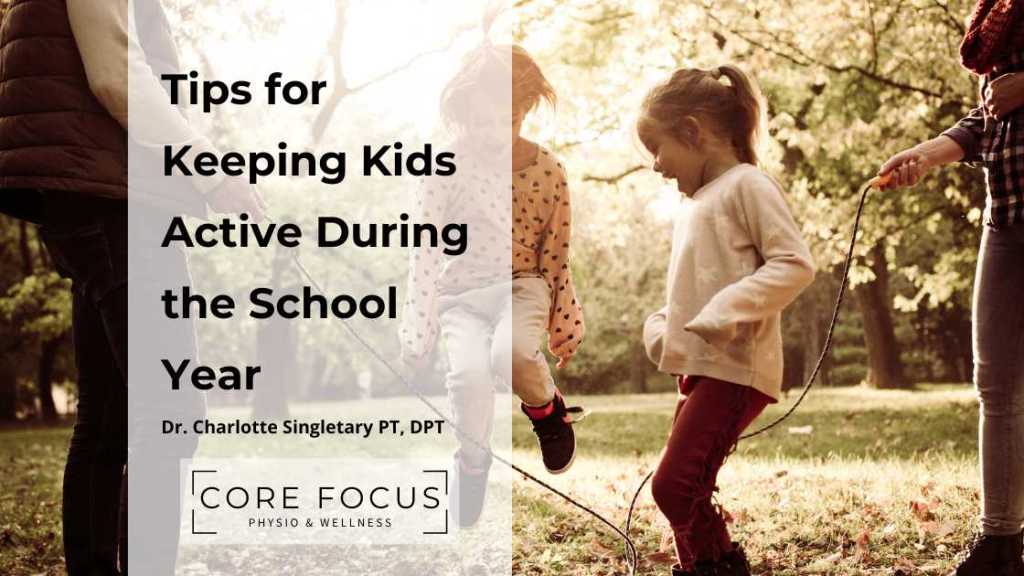

Between homework, after-school commitments, and the lure of screens, kids’ activity levels can drop fast once the school year starts. But movement is more than just a way to “burn off energy.” Active play helps with focus, balance, and coordination—all skills that support learning in the classroom.
If you’re looking for practical ways to keep your children moving (and engaged), try weaving in activities that not only get their heart rates up but also challenge their nervous systems. Think of it as a double win: they stay active, and their brains get a workout too.
Build Balance Into Daily Routines
Balance activities don’t have to be complicated. Something as simple as standing on one foot while brushing teeth can strengthen focus and body awareness. These small challenges are especially helpful for kids who fidget or struggle to sit still in class—they give the nervous system practice with self-control and midline orientation.
- Stand with feet together, eyes closed for 20 seconds.
- Balance on one foot while reaching across the body to grab something.
- Walk heel-to-toe across the room, turning the head side-to-side.
Play on the Floor After School
When kids come home from school, encourage them to get down on the floor. Positions like crawling, hands-and-knees play, or yoga-inspired moves help reset posture after a long day of sitting. They also remind the brain of the developmental stages that build coordination.
- Bird dog (opposite arm and leg reach).
- Rock backs (hips toward heels, then back up).
- Shoulder taps from hands-and-knees without letting the body twist.
Add Kneeling Games
Tall kneel or half-kneel positions are perfect for homework breaks. They challenge stability in a fun way and give kids a posture reset.
- Tall kneel balance with arms overhead.
- Half-kneel with a ball—pass it back and forth across the body.
- Kneel and rotate side-to-side, pretending to be a “lighthouse.”
Supine Play: Active Rest Time
Kids often flop on the couch with a tablet—but lying on the back doesn’t have to mean inactivity. Supine play builds midline awareness and core control while giving them an “active rest.”
- Dead bug: opposite arm and leg extension.
- Cross-body toe taps.
- Hand-to-opposite-knee touches.
Rolling and Tumbling
Rolling is one of the first movements we learn as babies, and it’s still powerful for brain-body connection. Encourage kids to roll, tumble, and move across the floor—it builds vestibular awareness, balance, and confidence.
- Segmental rolls (leading with head or legs).
- Log rolls across the carpet.
- Diagonal cross rolls (elbow to opposite knee).
Why This Works During the School Year
These activities aren’t just “extra exercise.” They give kids the chance to practice balance, cross their midline (important for reading and writing), and regulate their energy. When kids move in different planes—standing, kneeling, crawling, lying down, rolling—they train their brains as much as their bodies.
As the school year ramps up, try sprinkling these activities into your daily rhythm. Just 10 minutes here and there can make homework time calmer, sports performance stronger, and evenings a little more playful.

Disclosures & Disclaimers
Hey there! Just a heads-up. When you click on my links and make a purchase, I might get a tiny commission. It doesn’t affect my honest reviews and comparisons one bit! I’m all about recommending stuff I’ve personally tried, genuinely love, thoroughly researched, and wholeheartedly endorse.
** The views and opinions expressed on this site belong to Vigeo Ergo Consulting LLC. Any advice or suggestions offered herein are not a replacement for medical advice from a physician or other healthcare professional. My blogs are for informational and entertainment purposes only. It is not a substitute for professional medical advice, diagnosis, or treatment.
 Core Focus Fit
Leave a comment