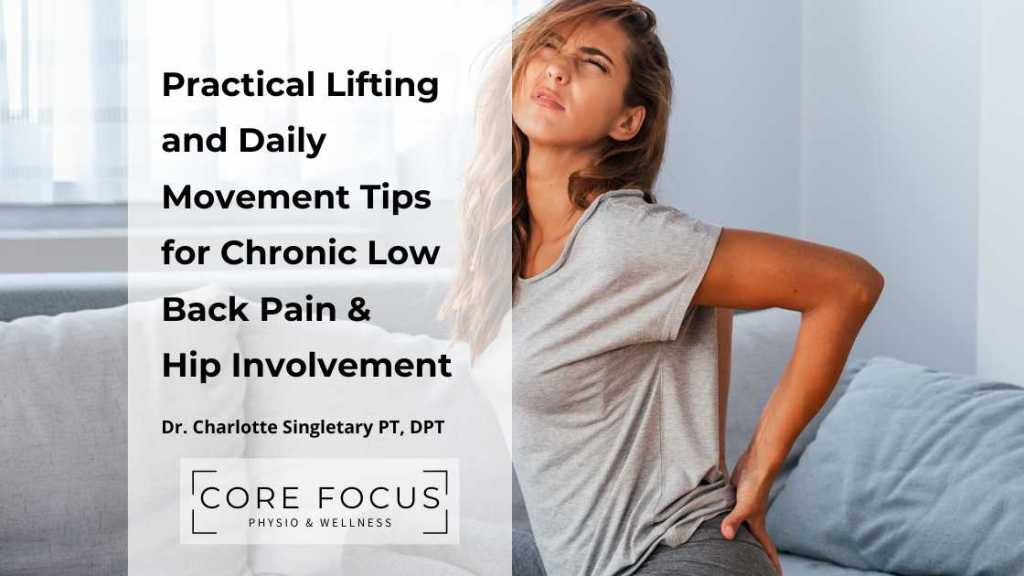

Chronic low back pain is one of the most common issues people face, and it doesn’t only affect the spine. The hips, pelvis, and surrounding muscles play a significant role in both causing and relieving discomfort. If you’ve been struggling with low back pain, learning how to move smarter in everyday life is just as important as what you do in the gym. By adjusting how you lift, carry, and perform daily activities—and by strengthening the right muscles—you can reduce strain and protect your back long term.
Real-Life Training: Safe Lifting Strategies
Many clients with back pain avoid lifting altogether, but life rarely allows us that luxury. Whether it’s moving laundry, picking up kids, or carrying groceries, safe lifting strategies can keep the back protected.
- Exhale Before Lifting: Holding your breath and bearing down can increase intra-abdominal pressure and strain the spine. Instead, exhale gently before initiating a lift to stabilize your core and relieve excess pressure.
- Slide Objects Close to the Body: Rather than bending forward and yanking heavy items up, slide them toward you first. The closer the object is to your center of gravity, the less leverage it has on your spine.
- Split Stance Lifts: When lifting from the ground, step one foot slightly forward and hinge from the hips. This split stance distributes weight more evenly, reduces shear forces on the spine, and allows you to use your legs effectively.
These simple strategies not only protect the back but also reinforce proper body mechanics you can carry into workouts and daily life.
Movement Adjustments for Daily Living
Low back pain often worsens during everyday tasks—not just in the gym. Teaching clients practical posture and positioning tips can prevent flare-ups.
- Carrying Children or Heavy Items: Avoid always loading the same side of the body, especially if you notice rib flare or a tilted pelvis. Instead, alternate sides or carry on the opposite side of rib flare to balance muscular demand.
- Reaching or Twisting: Rotate through the hips and thoracic spine rather than cranking from the lower back. Imagine your whole body moving as one unit, rather than separating your spine from your pelvis.
- Kneeling for Household Chores: When unloading the washer or dryer, kneel on one knee instead of bending repeatedly at the waist. This small change can save the lower back from cumulative stress.
Small daily movement modifications add up and create an environment where healing can occur instead of constant irritation.
Addressing Gluteal Strength and Low Back Pain
The hips and glutes are the powerhouse of the body, but when they underperform, the lower back often takes the load. Research shows that chronic low back pain is commonly linked to delayed glute activation and premature hamstring activation. Restoring proper glute function is essential for lasting relief.
Glute Medius and Maximus Activation
To correct imbalances, start with targeted exercises that prioritize glute engagement over hamstring dominance.
- Bridges: Lie on your back with feet hip-width apart, press through your heels, and focus on squeezing the glutes at the top. Avoid over-arching the back or letting hamstrings take over.
- Prone Leg Lifts with External Rotation: Lying face down, rotate the femur outward slightly before lifting the leg. This subtle adjustment encourages the glutes to fire first, rather than the hamstrings.
Teaching clients to feel the difference between hamstring and glute contraction is a critical part of retraining movement patterns.
Hamstring and Glute Integration
For clients with an anterior pelvic tilt, the hamstrings often need to be re-educated alongside the glutes. Excessive tilt can lock the glutes out of their optimal length-tension relationship, making them harder to recruit.
- Modified Bridges: Bring the feet closer to the hips during a bridge exercise. This position encourages hamstring co-activation, which in turn helps unlock glute strength.
- Postural Awareness: Teaching clients to find and feel a neutral pelvis in standing and movement helps carry over into lifting, running, and everyday tasks.
The goal isn’t to isolate the glutes from the hamstrings entirely but to restore proper sequencing so both muscle groups work together effectively.
Putting It All Together
Chronic low back pain rarely stems from one single cause. Instead, it’s usually a combination of posture, movement habits, and muscular imbalances. By teaching safe lifting techniques, introducing practical daily movement adjustments, and addressing gluteal strength, clients can build resilience and confidence in their bodies.
Improvement takes consistency, but small, mindful changes create long-term results. If you struggle with low back pain, start by adjusting how you move through your day and prioritize exercises that activate your hips and glutes. These strategies can reduce pain, improve stability, and restore the freedom to move with less fear and more strength.
As the school year ramps up, try sprinkling these activities into your daily rhythm. Just 10 minutes here and there can make homework time calmer, sports performance stronger, and evenings a little more playful.
Disclosures & Disclaimers
Hey there! Just a heads-up. When you click on my links and make a purchase, I might get a tiny commission. It doesn’t affect my honest reviews and comparisons one bit! I’m all about recommending stuff I’ve personally tried, genuinely love, thoroughly researched, and wholeheartedly endorse.
** The views and opinions expressed on this site belong to Vigeo Ergo Consulting LLC. Any advice or suggestions offered herein are not a replacement for medical advice from a physician or other healthcare professional. My blogs are for informational and entertainment purposes only. It is not a substitute for professional medical advice, diagnosis, or treatment.
 Core Focus Fit
Leave a comment