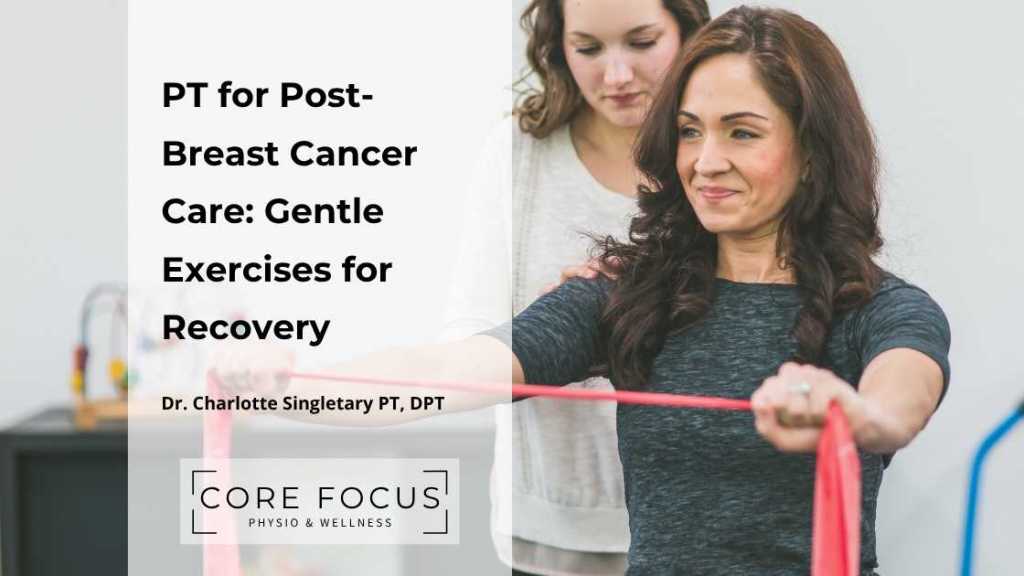

Recovering from breast cancer surgery or treatment isn’t just about rest, it’s about intentional movement and gradual rebuilding. Whether you’re a survivor looking to regain strength, mobility, and confidence, or a supporter of someone on this journey, gentle physical therapy (PT) exercises can be a key part of healing. Let’s walk through why movement matters, some safe exercises to begin with, and tips to make your recovery smoother and more empowering.

Why movement matters after breast cancer treatment
When you’ve had surgery, radiation, or other breast-cancer treatments, your body goes through a lot. The muscles around your chest, back, arm, and shoulder can tighten or weaken; scar tissue can form; and you might find yourself guarding your affected side without even realizing it. Without interventions, you risk stiffness, reduced range of motion, and even lymphedema (swelling of the arm).
Gentle PT and guided exercises help restore mobility, reduce pain, improve posture, and boost your emotional wellbeing too. Exercises can help get movement back and are particularly important if you’ve had radiation therapy that may stiffen tissues over time.
When you start to move comfortably, you’re not just healing, you’re reclaiming function. Keeping your shoulder, arm, and chest wall moving ensures you can get dressed, reach overhead, comb your hair, and return to your usual life.
Gentle foundational exercises to begin your recovery
Before you jump into any PT routine, make sure you’ve been cleared by your surgeon or care team. Every person’s body, treatment history, and healing timeline are unique. Once you’re ready, here are some beginner-friendly exercises tailored for post-breast-cancer care:
1. Deep breathing & gentle posture resets
- Sit or lie comfortably. Take a slow deep breath in, letting your belly and ribs expand, then exhale slowly. Repeat 3-5 times. This helps the chest wall stay mobile and supports relaxation.
- Do a posture check: shoulders relaxed, ears over shoulders, core gently engaged. Good posture supports your recovery and prevents secondary issues like neck or back pain.
2. Shoulder rolls and shrugs
- While seated or standing, gently shrug your shoulders up toward your ears, then release. Repeat 5-10 times.
- Follow with shoulder circles (forward then backward) at the size and speed that feels comfortable. This helps loosen the upper back, chest, and shoulder girdle.
3. Wall climbs / “wand” assisted arm lifts
- Stand facing a wall (about a foot away). Place your fingertips or palms on the wall and slowly “walk” your hands up as far as you can go without pain; walk back down. Repeat 5-10 times. This improves range for lifting your arm overhead.
- Alternatively, lie on your back with knees bent, hold a broomstick or wand in both hands, and gently lift the wand over your head (assisted by your unaffected arm) to the limits of comfort. Hold ~5 seconds, then release. Repeat 5-7 times.
4. Arm and hand mobility
- Sit upright and open/close your hand slowly (10 reps), or grip a small towel gently. This keeps the forearm and hand active and reduces stiffness.
- With your elbow bent by your side, rotate your forearm so your palm faces down then up (pronation/supination). 10-15 times. Useful for daily tasks like turning knobs or using utensils.
5. Scar-softening massage & mobility
- After your incisions are fully healed and cleared by your provider, gentle scar massage can help maintain skin mobility, reduce bind-down, and ease tension.
- Use 2-3 fingers to move the skin around the scar in all directions for 5-10 minutes daily.
Tips to make your recovery more effective
- Go slow and listen. Discomfort is okay, but pain is not. If you feel sharp pain, heaviness, worsening swelling, or unusual sensations, pause and check in with your provider.
- Consistency beats intensity. Doing gentle mobility twice a day is far more helpful than pushing hard once and then resting for days.
- Warm up your body first, like after a warm shower or 5-10 minutes of walking, before stretching or lifting. Warm tissues respond better.
- Track your progress. Mark reachable height on the wall when doing wall climbs, notice how much less tension you feel, or record how daily tasks are easier. These small wins add up.
- Incorporate light aerobic movement as approved (e.g., walking) to boost mood, circulation, and bone health. Avoid high-impact or heavy lifting until cleared.
- Consider posture support. After breast surgery many people naturally protect the surgical side (shoulder forward, side bent). Consciously reset into upright, balanced posture regularly to avoid secondary pain.
Recovering after breast cancer treatment is a journey—physically, emotionally, and mentally. The good news: gentle physical therapy exercises are one of the most empowering tools you have. By gradually restoring mobility, strength, and alignment you’re not just getting your body back—you’re reclaiming your life, your freedom, and your sense of self.
Disclosures & Disclaimers
Hey there! Just a heads-up. When you click on my links and make a purchase, I might get a tiny commission. It doesn’t affect my honest reviews and comparisons one bit! I’m all about recommending stuff I’ve personally tried, genuinely love, thoroughly researched, and wholeheartedly endorse.
** The views and opinions expressed on this site belong to Vigeo Ergo Consulting LLC. Any advice or suggestions offered herein are not a replacement for medical advice from a physician or other healthcare professional. My blogs are for informational and entertainment purposes only. It is not a substitute for professional medical advice, diagnosis, or treatment.
 Core Focus Fit
Leave a comment