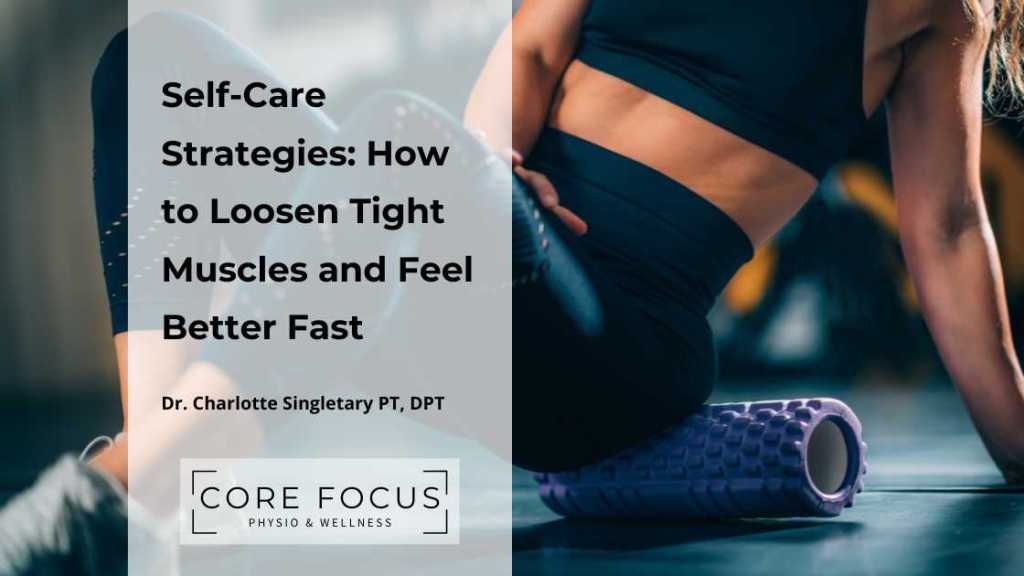

Tight muscles aren’t just uncomfortable, they can quietly pull your body out of alignment, limit mobility, and drain your energy. Whether you’re sitting at a desk all day, logging miles on your morning runs, or simply feeling the effects of stress, tension builds up in your muscles and fascia over time. That’s where self-myofascial release (SMR) comes in.

Think of it as a mini massage you can give yourself anytime. With just a foam roller, massage ball, or even your hands, you can target trigger points, increase circulation, and restore movement in stiff tissues. Best of all, it’s a powerful self-care habit that helps you feel more relaxed, move more freely, and recover faster.
What Is Myofascial Release and Why It Matters
Fascia is a thin layer of connective tissue that wraps around your muscles, bones, and organs. It’s kind of like an inner web that holds everything together. When muscles feel tight and fascia becomes “sticky” (often due to repetitive movement, injury, or inactivity), it restricts motion and creates painful “knots” called trigger points.
You can apply myofascial release by applying gentle, sustained pressure to these areas, helping the fascia and underlying muscles relax and move smoothly again. Self-myofascial release (SMR) can improve range of motion, decrease muscle soreness after exercise, and even improve overall athletic performance.
You don’t have to be an athlete to benefit. Regular SMR helps reduce everyday stiffness from sitting, improves posture, and encourages better body awareness, making it a great addition to anyone’s wellness routine.
Common Tools and Techniques You Can Use at Home
You don’t need fancy equipment to start. Here are a few simple tools to keep on hand:
- Foam roller: Great for larger muscle groups like the quads, hamstrings, and back.
- Massage or small, squishy ball: Ideal for smaller, harder-to-reach areas such as the calves, feet, or shoulders.
- Massage stick or rolling pin: Perfect for legs and arms when you prefer to control pressure with your hands.
- Yoga block or cushioned pillow: Gentle options for beginners or sensitive areas like the glutes or chest.
When rolling, go slow. Spend at least 30 seconds to a minute on each muscle group, and focus on areas that feel especially tender or restricted. Breathe deeply and let the pressure ease tension gradually rather than forcing it.
A good rule of thumb: it should feel like a “hurts-so-good” kind of pressure, not sharp or painful. If it hurts, lighten up or move to a nearby spot.
A Step-by-Step Routine for Daily Muscle Care
You can practice self-myofascial release before or after workouts, or anytime you need a quick reset from sitting too long. Here’s a sample 10-minute routine:
- Feet: Roll each foot over a massage ball for 30–60 seconds.
- Calves: Sit on the floor, place a foam roller under your calves, and roll from ankle to knee. Pause on tight spots.
- Quads and hips: Lie face down with a roller under your thighs. Slowly move up and down, pausing near the top of the hip flexors.
- Upper back: Place the roller below your shoulder blades and gently roll upward toward your shoulders, keeping your chin tucked.
- Chest and shoulders: Use a small ball between your chest and wall to release tension in your pecs and shoulders.
Finish with gentle stretching and a few slow, deep breaths. This helps your body absorb the benefits and signals your nervous system to relax.
The Mind-Body Benefits of Releasing Tension
Self-myofascial release isn’t just about muscles, it’s a form of mindful movement. The act of slowing down, breathing deeply, and tuning in to how your body feels is an act of self-care. As your muscles unwind, your nervous system follows suit, shifting from a stressed, fight-or-flight state to a calmer, more restorative mode.
Over time, this practice can improve not only your flexibility but also your mood, focus, and overall sense of well-being. Many people find it helps them sleep better, manage daily stress, and move with more confidence.
So next time your back feels tight, your legs feel heavy, or your mind feels cluttered grab your foam roller instead of pushing through. Just a few minutes of mindful release can make a big difference in how you move, think, and feel.
Taking care of your muscles is one of the simplest ways to take care of your whole self. And when you combine self-myofascial release with other healthy habits (hydration, sleep, stretching, and movement) you’ll feel the difference not just in your body, but in your everyday energy and focus.
Disclosures & Disclaimers
Hey there! Just a heads-up. When you click on my links and make a purchase, I might get a tiny commission. It doesn’t affect my honest reviews and comparisons one bit! I’m all about recommending stuff I’ve personally tried, genuinely love, thoroughly researched, and wholeheartedly endorse.
** The views and opinions expressed on this site belong to Vigeo Ergo Consulting LLC. Any advice or suggestions offered herein are not a replacement for medical advice from a physician or other healthcare professional. My blogs are for informational and entertainment purposes only. It is not a substitute for professional medical advice, diagnosis, or treatment.
 Core Focus Fit
Leave a comment