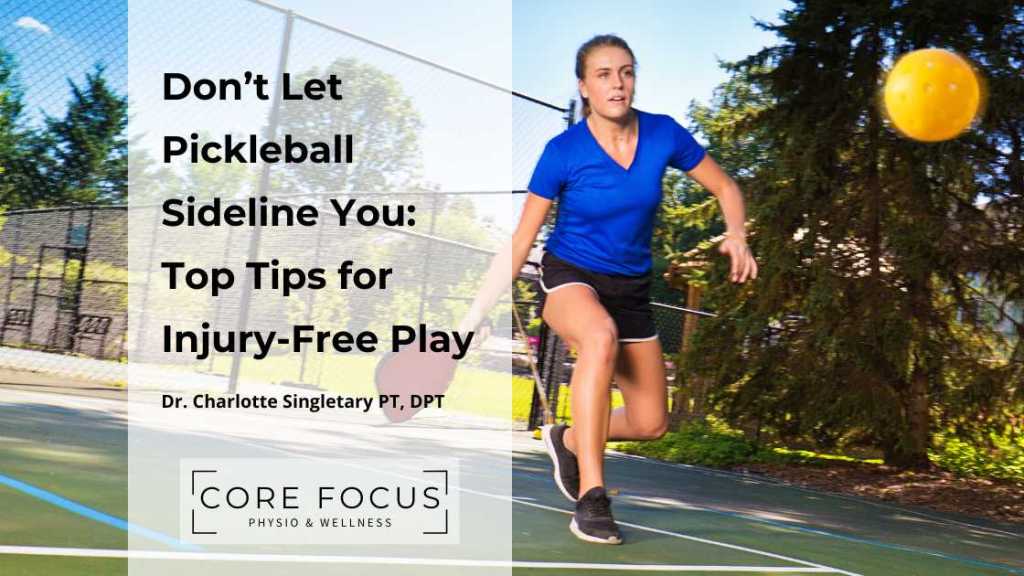

It’s official—pickleball is no longer just a retirement community favorite. Everyone from teens to parents to weekend warriors are hitting the courts, and with that surge in popularity comes a surprising rise in shoulder and elbow injuries (Sharp 2024). If you’re someone who loves the game but not the ache that follows, this blog is for you.
Why Pickleball Pains Are on the Rise
Pickleball combines quick bursts of movement with repetitive swinging, which places stress on smaller joints like the shoulder and elbow—especially if you haven’t been playing sports regularly or warming up beforehand. Many players jump into games without much prep, which can lead to overuse injuries like:
- Rotator cuff tendinitis or tears
- Elbow tendinopathy (often called “pickleball elbow”—similar to tennis elbow)
- Shoulder impingement
- Joint inflammation or bursitis
Add in the fact that many pickleball players are in their 40s, 50s, and beyond—and that tendons naturally stiffen with age—and you’ve got the perfect setup for lingering pain if you’re not careful.
The Rotator Cuff and Elbow Tendons: What You Need to Know
The rotator cuff is a group of four muscles that stabilize your shoulder. These muscles help lift and rotate your arm, and they take a beating with every serve, volley, and overhead smash. Similarly, the tendons in your elbow (especially on the outer side) can become irritated from repetitive gripping and swinging motions.
When these tissues get inflamed or overloaded, you’ll feel it—usually as nagging pain during or after a match, stiffness in the morning, or weakness when reaching or lifting.
3 Pre-Game Warmups That Make a Difference
Don’t underestimate the power of a good warm-up. You only need 5–7 minutes to prep your joints and muscles for the game ahead. Here are three warmups I recommend for every pickleball player:
- Arm Circles & Shoulder Rolls – Start small and work up to larger circles. Add forward and backward rolls to improve blood flow.
- Resistance Band External Rotations – Using a light resistance band, rotate your arm outward to activate your rotator cuff. Aim for 10–15 reps per side.
- Wrist and Forearm Mobility – Gently flex and extend your wrists and perform forearm circles. This reduces stress on your elbow tendons during paddle swings.
Bonus: If you’re short on time, even a few shoulder shrugs and paddle swings with slow control can help wake up your muscles.
When to Ice, When to Rest, and When to Get Checked
Feeling a little sore after your game is normal, especially if you’re playing multiple times a week. But if the pain:
- Lingers for more than 3–5 days
- Wakes you up at night
- Is sharp or limits your motion
- Makes it hard to grip your paddle
…it’s time to back off and seek help from a physical therapist or orthopedic specialist.
Try This Recovery Approach:
- Ice for 15–20 minutes post-game for immediate pain relief and if your elbow or shoulder is inflamed.
- Rest or cross-train for a few days to allow tissues to heal.
- Gentle mobility work like pendulum swings or scapular retractions can maintain motion without added strain for overall recovery
And if you’re returning from a past injury or feeling persistent discomfort, working with a physical therapist can help build strength, improve mobility, and prevent the same pain from returning next season.

Disclosures & Disclaimers
Hey there! Just a heads-up. When you click on my links and make a purchase, I might get a tiny commission. It doesn’t affect my honest reviews and comparisons one bit! I’m all about recommending stuff I’ve personally tried, genuinely love, thoroughly researched, and wholeheartedly endorse.
** The views and opinions expressed on this site belong to Vigeo Ergo Consulting LLC. Any advice or suggestions offered herein are not a replacement for medical advice from a physician or other healthcare professional. My blogs are for informational and entertainment purposes only. It is not a substitute for professional medical advice, diagnosis, or treatment.
 Core Focus Fit
Leave a comment